





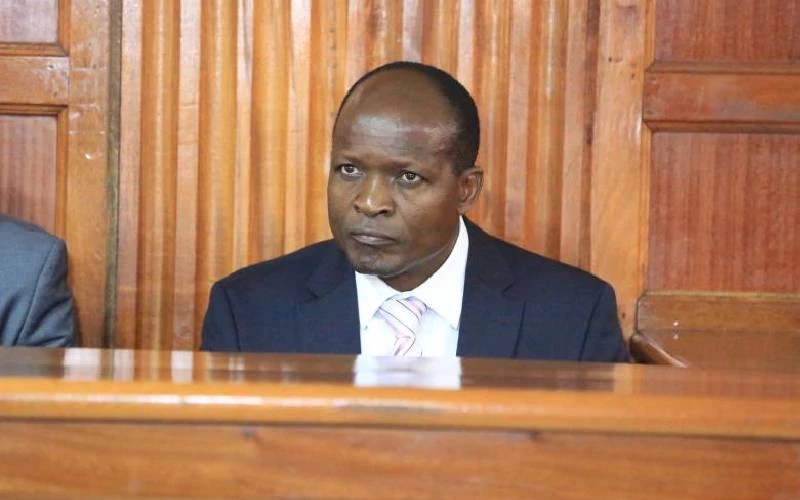
The High Court has set May 29, 2026, as the date for delivering judgment in the murder case involving former Migori Governor Okoth Obado and his two co-accused over the 2018 killing of university student Sharon Otieno.
During a mention on Wednesday before Justice Cecilia Githua, the Court confirmed the timeline and directed that all accused persons be physically present at 10:30 am when the verdict is read.
The Office of the Director of Public Prosecutions (ODPP) has urged the court to find Obado, Michael Juma Oyamo, and Casper Ojwang Obiero guilty, asserting that the prosecution had proven its case beyond a reasonable doubt.
Senior Assistant Director of Public Prosecutions Gikui Gichuhi told the Court that the evidence shows a “carefully orchestrated plot” involving the three accused. She noted that witness testimonies, call data records, cybercrime analysis, and forensic findings collectively point to the trio’s involvement in Sharon’s abduction and murder.
“The totality of the evidence fits together seamlessly,” Gichuhi said. “It forms a single, coherent picture pointing to the guilt of the accused persons.”
The prosecution argued that Obado, Oyamo, and Obiero acted with a common intention to eliminate Sharon and silence a key witness, motivated by political and personal interests. On the night of September 3, 2018, Sharon and a prosecution witness were reportedly abducted from Graca Hotel, with Oyamo and Obiero allegedly facilitating the incident. Investigators linked the vehicle used to Obiero’s family, stating it was registered in his wife’s name and driven by an associate of the accused.
Gichuhi dismissed the defense as inconsistent and lacking credibility, describing it as “contradictory, implausible, and an afterthought designed to escape liability.” She added that the defense failed to raise any reasonable doubt about the accused’s involvement.
Obado, Oyamo, and Obiero are jointly charged with murder, and the Court had previously ruled that the accused have a case to answer. They have already presented their defense.
The May 29 ruling is expected to bring closure to a case that has drawn national attention over the past eight years, highlighting issues of accountability, justice, and governance in Kenya.



r6eqpd
dhrlg3
tap here – Directed attention transforms energy into consistent and measurable progress.
brucknerbythebridge – The site feels peaceful and browsing through it is very relaxing.
Ищете актуальный прайс лист на строительные работы? Выполняем строительство и ремонт любой сложности. В смете заранее прописывается расценка на строительные работы и итоговая стоимость строительных работ. Работаем аккуратно, соблюдаем сроки и строительные нормы. Поможем рассчитать бюджет проекта и подобрать оптимальные материалы. Все цены прозрачные и понятные. Оставьте заявку, чтобы получить расчёт и узнать стоимость строительных работ для вашего объекта.
discoverhiddenpaths.shop – Engaging platform, exploring unique items was simple and enjoyable.
discover details – Creating forward motion carefully step by step prevents setbacks and boosts results.
explore now – Quick and intuitive browsing makes locating deals easy.
explore cottonmeadow treasures – Browsing today was simple, with clear sections and fast pages.
explore now – Quick and intuitive browsing makes locating deals easy.
Prosta Peak is a high-quality prostate wellness supplement formulated with a comprehensive blend of 20+ natural ingredients and essential nutrients to support prostate health
MounjaBoost is a next-generation, plant-based supplement created to support metabolic activity, encourage natural fat utilization
ncr4nw