





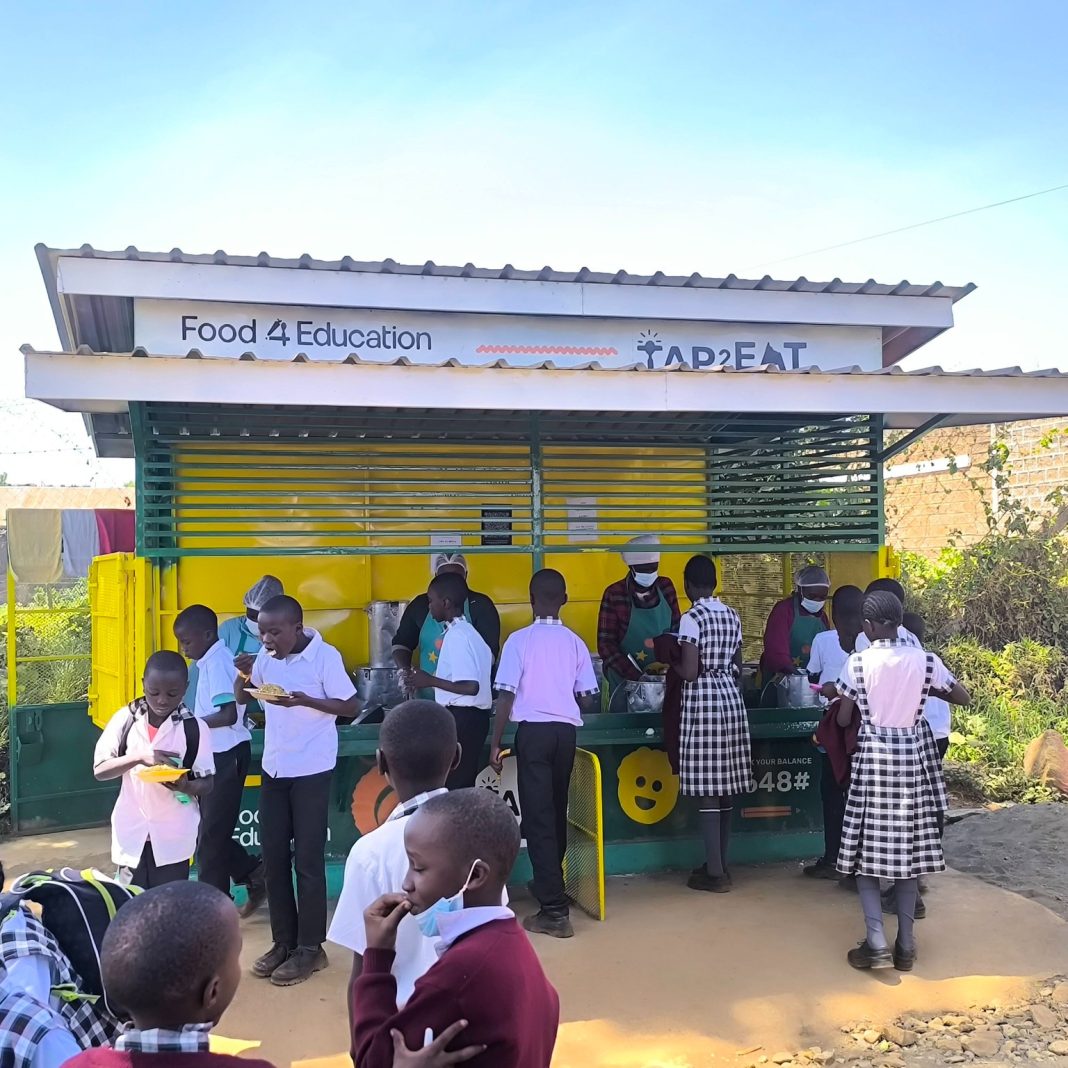
Limuru Constituency’s innovative “Tap to Eat” school feeding programme has been officially ranked as the best in Kenya, marking a major milestone in efforts to improve learner nutrition, school attendance, and academic performance, attracting national attention from education stakeholders and policymakers.
Launched in March 2024 by Limuru Member of Parliament Eng. John Kiragu Chege in partnership with Food4Education, the programme has introduced a centralised model where meals are prepared at a mega kitchen located at Kamandura Comprehensive School before being distributed to participating schools across the constituency. The centralised system has also improved food safety standards and streamlined large-scale meal preparation across the constituency.
Under the system, pupils use NFC-enabled wristbands to access meals, with payments seamlessly topped up by parents through M-Pesa, making the process cashless, efficient, and transparent. It also enhances accountability in school feeding management.
Currently, the programme serves over 15,000 pupils daily, with each meal costing KSh 15, translating to approximately KSh 2,700 per term. Vulnerable learners benefit from the initiative fully, receiving meals at no cost, ensuring equitable access to nutrition for all learners.
The model has also attracted attention beyond Limuru, with similar rollouts being planned in Githunguri, Kikuyu, and Kiambaa sub-counties. Several legislators and education stakeholders have visited the facility to benchmark on its success and operational efficiency, underscoring its growing reputation as a national model.
Education stakeholders have praised the programme for its visible impact on learning outcomes. Schools participating in the initiative have reported increased enrolment, improved daily attendance by between 10 and 20 per cent, and better classroom concentration among learners, which education experts link to improved learner outcomes.
Teachers have noted that well-fed pupils are more attentive and actively engaged in class activities, a factor that has contributed to improved academic performance across the board in classroom performance metrics.
Beyond education, the programme has also generated local economic benefits, creating jobs for cooks, kitchen staff, food handlers, and transport riders involved in meal distribution, strengthening local livelihoods and the school feeding value chain.
Parents, too, have welcomed the initiative, citing reduced financial pressure and the convenience of not having to send daily lunch money or worry about lost cash, especially among households in lower income brackets.
The Limuru Tap to Eat programme continues to be viewed as a model for sustainable school feeding in Kenya, blending technology, efficiency, and community impact in one integrated system, with growing interest in replication across other counties.


Heya i amm foor thhe first time here. I cake acdoss this board andd
I find It realky useful & itt helpd mee out a lot. I hope to give someghing
back aand hlp otgers like youu helped me.