





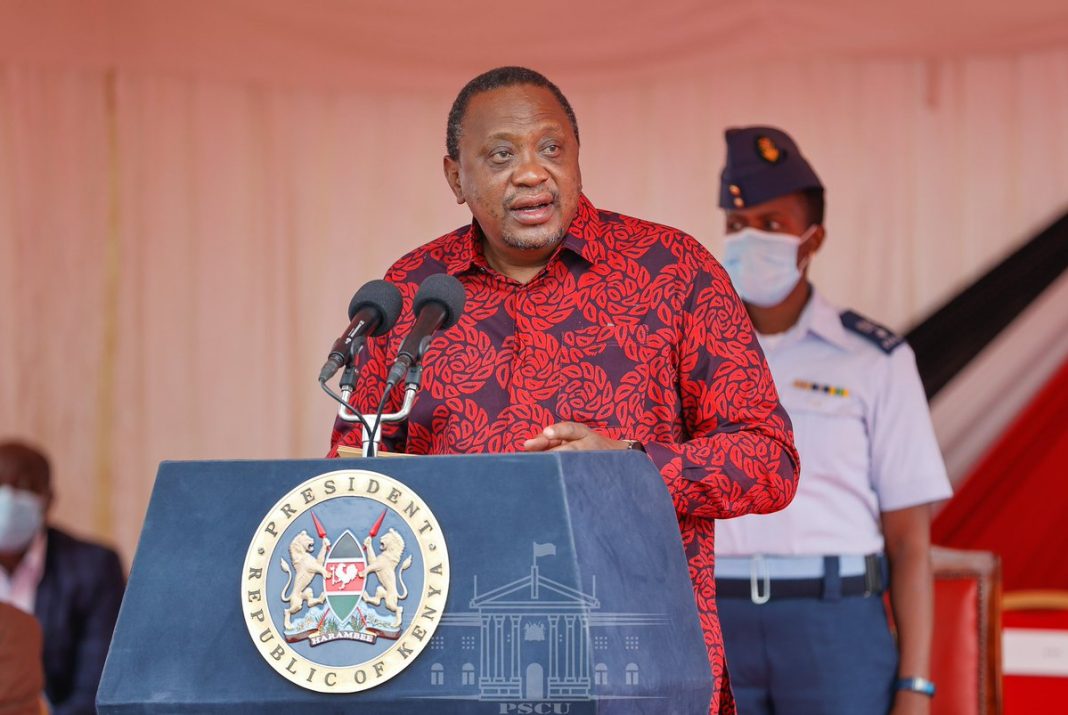
Former President Uhuru Kenyatta has defended his continued involvement in Kenyan politics, maintaining that he has a constitutional right to support and safeguard his political party despite no longer holding public office.
Speaking via phone during the Maa Delegates Conference and a homecoming ceremony for Jubilee Secretary General Moitalel Ole Kenta in Narok County on May 1, Kenyatta dismissed criticism over his political engagement, stating that his actions are guided by democratic principles and personal conviction.
The former Head of State emphasised that his connection to the Jubilee Party remains strong, insisting that his role goes beyond past leadership and is anchored in loyalty and shared political ideals.
“Truly, I have the right to defend my party. I am not seeking any position, but I am a Jubilee member in every sense—by circumstance, by resources, and by blood,” he said.
Kenyatta maintained that stepping down from office does not strip him of his political rights, noting that the Constitution allows every Kenyan to freely associate and participate in political affairs.
He further defended his stance by pointing to global examples, arguing that former leaders in other democracies continue to support and influence their parties after leaving office.
“If you go to America, people like Obama still defend their parties. Why should I be told that I cannot speak or contribute anything? Everyone has a democratic right under our Constitution to protect their rights,” he said.
The former President also used the platform to criticise the current administration, accusing it of interfering with opposition parties and shrinking the democratic space. Although he did not go into detail, Kenyatta warned that such actions could undermine political pluralism and weaken the country’s democratic institutions.
His remarks come at a time when political activity is beginning to intensify ahead of the 2027 General Election, with leaders positioning themselves and their parties for future contests.
Kenyatta’s statement signals his intention to remain an active voice in the country’s political landscape, particularly within the Jubilee Party, as it seeks to reorganise and strengthen its presence.
The Maa Delegates Conference and the homecoming event for Ole Kenta brought together political leaders and supporters from the region, highlighting ongoing efforts to consolidate party structures and mobilise support at the grassroots level.
As debate continues over the role of former leaders in active politics, Kenyatta’s remarks are likely to spark further discussion on the limits and freedoms of political participation after leaving office.