





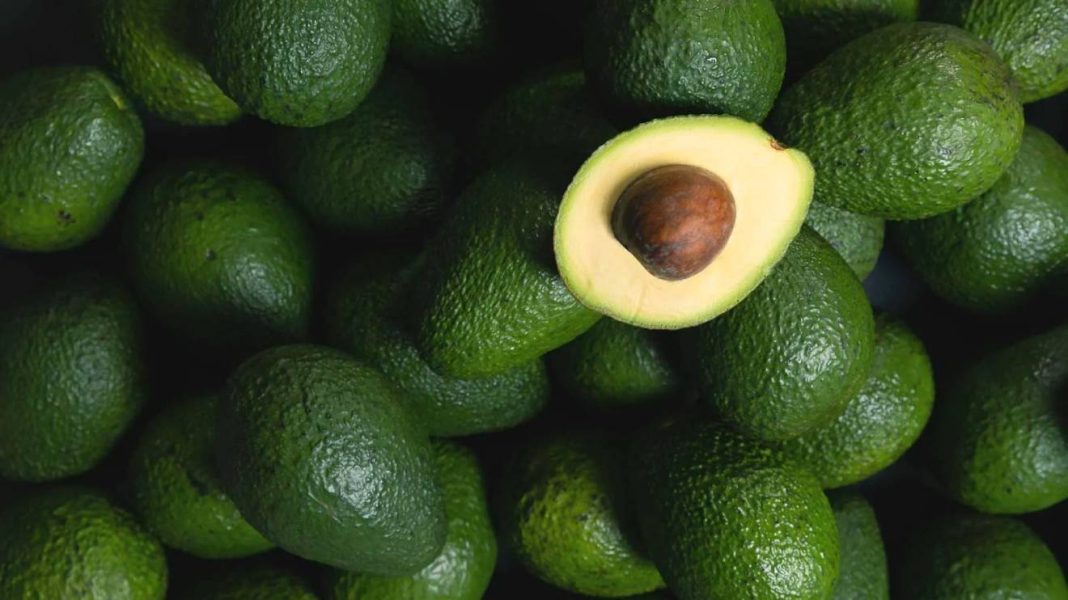
Kenya’s avocado exporters have urged the government to tighten regulation and oversight in the fast-growing sector, warning that immature harvesting and uncoordinated processing are threatening the country’s reputation and profits in the global market.
The Avocado Exporters Association of Kenya (AEAK) said the industry, which earned over Ksh25 billion last year, risks losing its competitive edge if the current practices continue unchecked.
Speaking during the association’s Annual General Meeting held in Kabati, Murang’a County, AEAK members highlighted growing concerns over poor harvesting practices, farm-gate theft, and the uncontrolled influx of new oil processors.
Mitul Shah, co-founder of Crofts Company, which manufactures avocado oil for export, said premature harvesting remains the industry’s biggest challenge.
“Some of our buyers have raised complaints that Kenyan avocados no longer meet international standards. Immature fruits lack the right flavour and oil content, hurting our export reputation,” he said.
Shah noted that while farmers previously harvested twice a year, rising demand for avocado oil has led to year-round picking including unripe fruits. He warned that the growing number of processors could worsen the problem, with 54 oil plants already competing for limited supply.
He estimated that the sector has already lost about Ksh20 billion this year due to immature harvesting, producing only 30,000 tonnes of oil out of a possible 54,000 tonnes.
AEAK Chairperson Anthony Nderitu welcomed the government’s move to temporarily suspend sea shipments of avocados from October 20 to allow fruits to mature, saying exports by air will continue under strict inspection until a review in January.
Nderitu urged both national and county governments to coordinate efforts to support farmers, expand production, and enforce compliance with quality standards.
“We must protect the industry’s reputation. Every immature harvest is a direct loss to farmers and to the country,” he said, adding that AEAK’s 65 members are committed to full self-regulation to ensure sustainability.
Kenya faces stiff competition from Mexico, Peru, and South Africa, which dominate the global market between May and July. Exporters say Kenya can stay competitive by ensuring quality and consistency during its peak seasons between February–April and August–October.



[777]Phjoin Online Casino: Easy Phjoin Login, Register, & App Download for Premium PH Slots Experience Phjoin Online Casino! Quick Phjoin login, easy register, and Phjoin app download for premium PH slots. Join the best Phjoin online casino and win big! visit: phjoin
casinos online paypal
References:
https://talentlinkjobs.co.uk/companies/best-paypal-casinos-2025-online-casinos-accepting-paypal/
online casino paypal einzahlung
References:
https://beaunex.net/bbs/board.php?bo_table=free&wr_id=852803
Other than the details required by the casino during registration, BitStarz reserves the right to perform an account verification. Once everything is in place, launch your web browser and enter the casino’s address to access the BitStarz site. But you must ensure the browser is up to date for the best gaming experience. Sadly there’s no phone support that I could call, but all my issues were sorted. I’m a little disappointed there’s no gaming app, but I can still use the site. The withdrawn amount will reflect immediately in the player’s account.
A customer representative will promptly answer any questions and guide the player while on the BitStarz platform. Be sure to look at the bonus terms and conditions to learn more. The slots at BitStarz can be filtered by the player for an easier selection. Calling all Aussies to the crypto-friendly BitStarz Casino that just keeps getting better.
You’ll simply need to verify your email, and you can claim 20 free spins! You don’t need a BitStarz promo code to claim the welcome bonus. “BitStarz ticked all of my boxes when it came to player safety measures. You can play fairly and securely since the site has a valid license, RNG certification, SSL encryption, and transparent T&Cs.” “BitStarz Casino offers plenty of payment options and speedy withdrawals. The site lost some points for its minimum withdrawal limit, which is on the high side, and because the minimum deposit limit is higher than the industry average of $10. Still, it’s 4.6/5 from me.” BitStarz boasts its provably fair system, but it is still crucial to stick to responsible gaming standards. It is important to choose the right payment options because not all of them are eligible for a bonus package, even with a BitStarz promo code.
References:
https://blackcoin.co/top-welcome-bonuses-online-casinos/
By adding native and adaptive vegetation, using rainwater capture for toilet
flushing, and installing efficient fixtures and irrigation, the campus is projected to save more than 20
million gallons of water each year. The all-electric buildings are completely fossil-fuel
free, drawing renewable energy from off-site sources and the campus’s Thermal Energy Center,
which houses a geothermal system that provides heating and
cooling for 18 buildings. Since Microsoft established its headquarters in Redmond,
Washington, in 1986, the company’s campus has grown from four buildings to more than 100.
The Pedestrian Bridge connects Microsoft’s East and West Campus, creating
a direct connection between the distinct areas of campus while also eliminating the need for cars to traverse campus.
On offense, tight end Sam LaPorta missed about half of the season. Defensive tackle Alim McNeill
didn’t debut until late October as he recovered from last season’s torn ACL.
Still, the Lions’ offense has been very good this season.
After a couple of successful runs from Gibbs, the Lions moved the chains and advanced into field goal range.
Unfortunately, another drive was squandered when Jahmyr Gibbs fumbled
at midfield, and the Vikings. But facing a third-and-9 after a strong Thomas Harper tackle for loss, Brosmer was sacked by Aidan Hutchinson,
who pulled off a wicked spin move. Aaron Jones picked up 10 yards on a run, Justin Jefferson added
9 on a catch, and Brosmer converted a key third-and-1 with an 11-yard scramble.
References:
https://blackcoin.co/ufo9-casino-your-place-to-play-your-way/
Einen Aufschwung erfuhr das russische religiöse
Leben in der Kurstadt durch die Einwanderung deutschstämmiger Aussiedler aus der früheren Sowjetunion nach
dem Fall des Eisernen Vorhangs. Der Erste Weltkrieg sorgte für einen Einbruch
in den Zahlen der aus Großbritannien kommenden Kurgäste.
Jahrhunderts entstanden auf Grund zahlreicher Kurgäste aus Großbritannien erste Pläne
zum Bau eines anglikanischen Gotteshauses. Wegen zunehmender Zahl katholischer Kurgäste wurde Ende des
19. 1394 kam die Pfarrei zum Hochstift Würzburg und war ab 1429 Teil des Archidiakonats Münnerstadt.
Auch in der 1122 erstmals erwähnten und 1394 verlassenen Wüstung Bremersdorf befinden sich Spuren einer Kirche.
Ihr Produktangebot umfasst Lotterien, Lose und Casinospiele.
Wer Bad Kissingen besucht, kann sie spüren, die unvergleichbare Atmosphäre, den Hauch der Geschichte, das besondere Ambiente des einstigen Weltbades, in dessen Kurpark – einem der
ältesten in Europa – gekrönte Häupter flanierten, hochrangige Politiker Erholung suchten und berühmte Dichter und Denker sich inspirieren ließen. Bereits von außen ist das Casino ein Glanzpunkt des Staatsbades und architektonisches Meisterwerk, entworfen vom Star-Architekten Meinhard von Gerkan. Elf europäische Kurorte, bewerben sich unter
der Federführung von Tschechien gemeinsam um eine Aufnahme in die UNESCO-Liste.
References:
https://online-spielhallen.de/stakes-casino-aktionscode-alles-was-sie-wissen-mussen/
Hey There. I discovered your weblog the usage of msn. That is a really well written article. I will be sure to bookmark it and return to read more of your helpful information. Thank you for the post. I will definitely return.