





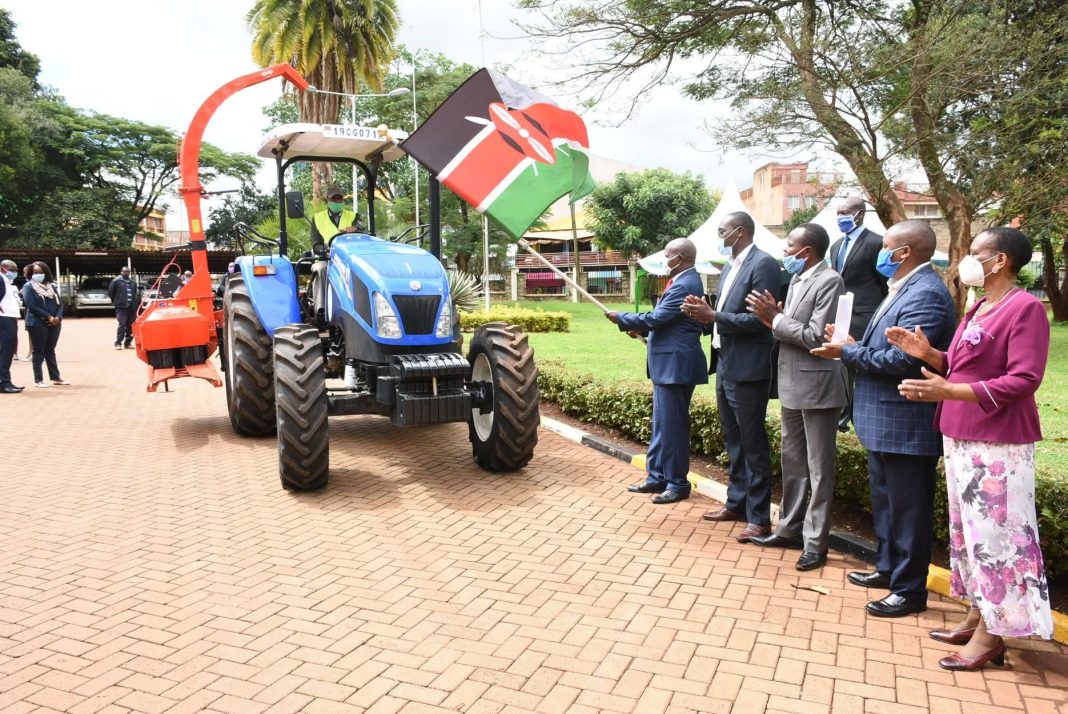
Nyeri Governor Mutahi Kahiga has outlined sweeping agricultural gains achieved over the past year, crediting targeted investments in soil health, irrigation, value chains and farmer support for boosting productivity across the county.
Delivering his 8th State of the County Address, the governor said agriculture remains Nyeri’s economic backbone, with most households depending on it for their livelihoods. To strengthen the sector, the county prioritised six key value chains — coffee, tea, dairy, potato, horticulture and aquaculture and channelled resources to unlock growth.
A major focus has been restoring soil health. The county procured 112,500 bags of agricultural lime and other conditioners, alongside three digital soil scanners to help farmers test their soils at subsidised rates. Kahiga said the initiative has enabled farmers to use the right fertiliser, cut costs and improve yields.
More than 145,000 farmers have been registered and profiled through a joint programme with the national government, allowing targeted support, including fertiliser e-vouchers. To boost resilience amid climate change, Nyeri placed an additional 2,370 acres under irrigation through new water projects, dams and tanks, directly benefiting over 11,000 households.
Extension services have also expanded significantly. The county purchased eight vehicles and 18 motorbikes to increase officers’ mobility, and engaged 140 young professionals under the Agri-Preneurship Programme. Kahiga noted that these officers now work closely with cooperatives to improve farmer outreach.
Coffee reforms remain a major highlight. Thirty-nine factories have been rehabilitated with new eco-pulpers, solar dryers, drying beds, digital systems and security lighting. Gikanda Cooperative has also operationalised its dry mill. The county says the upgrades have cut drying time from 21 days to five, improving quality and lowering costs. Nyeri farmers, including those at Njuriga Cooperative, fetched some of the highest cherry prices nationally, with some earning Ksh172 per kilo.
To encourage youth participation, the county supplied 20,000 coffee seedlings, 720 tonnes of manure and 151 knapsack sprayers to young farmers in Kirimukuyu Ward.
Household nutrition initiatives have also expanded, with 398,173 one-month-old chicks distributed to more than 530 farmer groups. On dairy development, annual production has grown from 94 million litres in 2018 to 121 million litres, supported by disease control programmes, artificial insemination and improved feed systems. Over eight years, Nyeri has distributed 32 milk coolers, pasteurisers, pre-chillers and mixers to cooperatives and dairy processors.
The county has also invested in livestock, distributing 1,134 dairy goats to farmer groups and supporting fodder production.
Nyeri’s avocado farmers continue to benefit from strong market prices, with organised groups in Tetu earning up to Ksh24 per fruit the highest in the country. The county has supplied 288,000 high-value seedlings including Hass avocado, macadamia, bananas and mangoes.
Further investments include 100,000 tea seedlings, the rehabilitation of seven Tea Buying Centres, and distribution of certified maize, beans and potato seeds.
In aquaculture, Nyeri, in partnership with IFAD, has supported 1,521 fish farmers with over 1.5 million fingerlings, 583 tonnes of feed, 586 pond liners and 37 cover nets.
Governor Kahiga said these interventions are positioning Nyeri as one of the most productive and resilient agricultural counties in Kenya, with continued investment aimed at strengthening food security and raising household incomes.



[6721]pglucky88: Best Philippines Slot Online. Easy Login, Register, & App Download with Link Alternatif. Join pglucky88, the best Philippines slot online. Easy pglucky88 login, register, and app download. Use our pglucky88 link alternatif for secure gaming and big wins! visit: pglucky88