





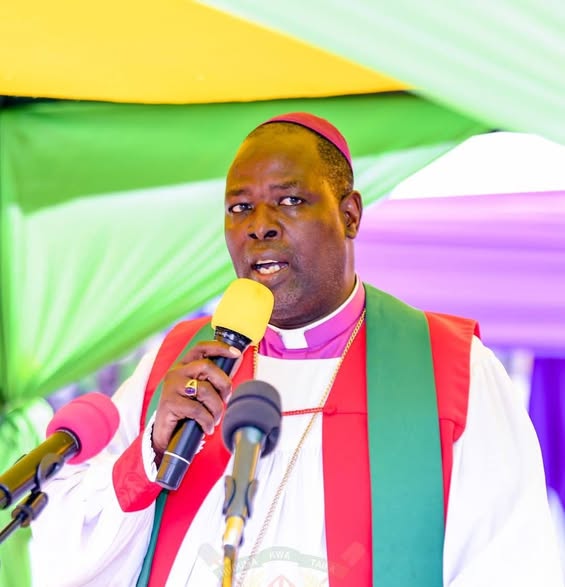
Church leaders have urged politicians to put aside early 2027 campaigns and focus on addressing the worsening drought affecting millions of Kenyans.
Speaking in Kisumu, Jackson Ole Sapit, Archbishop of the Anglican Church of Kenya, warned that escalating political tensions risk deepening divisions at a time when the country should be united in responding to a humanitarian crisis.
The clerics noted that an estimated 3.3 million Kenyans are currently affected by drought, calling on leaders to prioritise service delivery over political survival.
“Let us not project voices as if Kenya is going to collapse because of political disagreements,” Sapit said, adding that the country has constitutional mechanisms to manage political competition peacefully.
He criticised leaders who shift focus to campaigns shortly after assuming office, saying Kenyans expect tangible results rather than endless political realignments and shifting alliances.
Sapit also called for a truce between governors and senators following recent public disputes over oversight, emphasising that public resources must be protected and utilised responsibly.
In Nyeri and later in Laikipia County, Anthony Muheria echoed the sentiments, cautioning leaders against politicising the drought crisis.
“We must not weaponise drought. This is about saving lives and protecting livelihoods,” Muheria said, noting that disputes over relief distribution only worsen the suffering of vulnerable families.
The clergy maintained that drought response should be treated as a national priority requiring cooperation across political divides.
The crisis continues to hit several arid and semi-arid counties hard, with families struggling to access food, water and pasture for livestock.
Meanwhile, Deputy President Kithure Kindiki said the government has begun distributing relief food and animal feed to affected regions, particularly in northern Kenya.
The Kenya Red Cross Society estimates that over two million people require urgent assistance, with Turkana, Mandera, Wajir, Samburu, Garissa, Isiolo, Marsabit, West Pokot and Baringo among the worst affected counties.
Church leaders have now challenged political actors to rise above partisan interests and work collectively to cushion vulnerable communities.

6xx8o4