




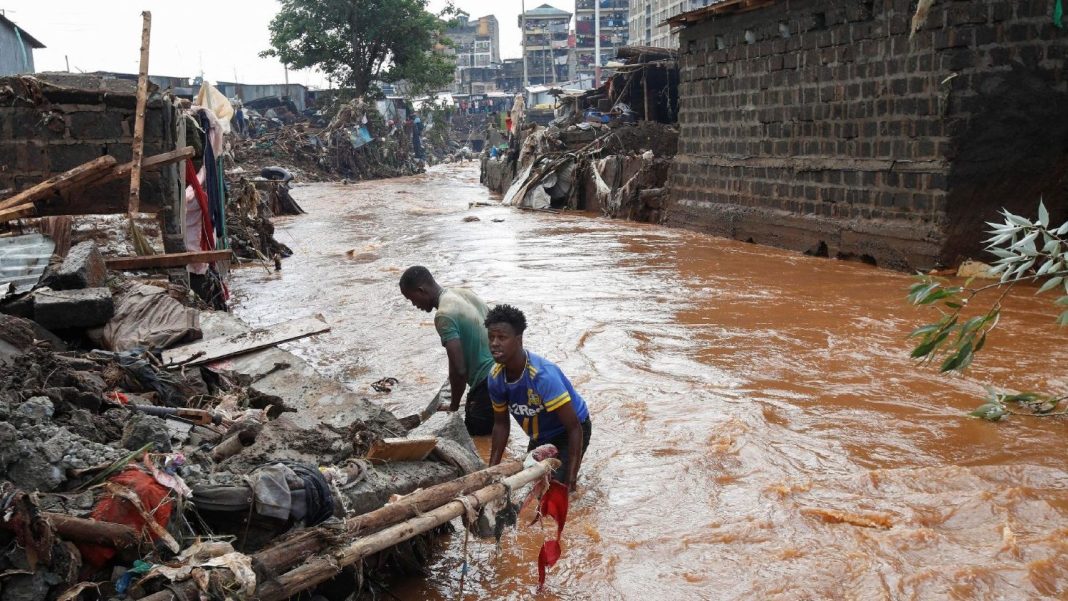
Families searching for loved ones following the devastating flash floods that swept through Nairobi over the weekend have been urged to visit the Nairobi City Mortuary to help identify bodies recovered after the tragedy.
In a public notice issued on Monday, Nairobi West County Commissioner Rose Chege confirmed that the mortuary is currently holding 27 bodies whose identities remain unknown.
According to the commissioner, authorities are appealing to members of the public who may have missing relatives or friends following the floods to come forward and assist in the identification process.
“Anyone who may be missing a relative or friend following the flash floods that hit Nairobi is advised to visit Nairobi City Mortuary to assist with identification,” Chege said in the statement.
Officials revealed that the unidentified victims include 22 men, three women and two children. Post-mortem examinations are also underway as part of the process to establish the exact causes of death and confirm identities.
The appeal comes in the wake of destructive floods that followed heavy rainfall across the capital and its surrounding areas late last week. Several estates experienced severe flooding, with vehicles swept away, homes submerged and major roads rendered impassable.
Authorities say the floods caused widespread disruption to transport and forced many residents to flee their homes as water levels rose rapidly in low-lying neighbourhoods.
By Sunday evening, government officials confirmed that at least 42 people had died across the country following the floods. Out of the reported fatalities, 26 deaths were recorded within Nairobi alone, making the capital the hardest hit region.
Speaking during a televised interview, Nairobi Governor Johnson Sakaja described the situation as a national disaster and called attention to long-standing infrastructure challenges in the city.
Sakaja noted that Nairobi’s drainage systems require a major overhaul to prevent similar disasters in the future. According to the governor, the county would need about KSh25 billion to completely upgrade the city’s drainage infrastructure.
He further explained that the county government currently requires approximately KSh60 billion annually to effectively manage the city, maintain essential services and respond to emergencies such as floods.
“I am not overwhelmed; I am under-resourced,” Sakaja said, adding that Nairobi remains a service hub that employs thousands of public workers responsible for keeping key systems running.
Despite the challenges, the governor expressed optimism that a recently signed cooperation framework between the national government and the county administration could unlock an additional KSh80 billion aimed at improving infrastructure and boosting service delivery.
Meanwhile, authorities continue rescue, recovery and identification efforts as families across the city search for missing relatives in the aftermath of the deadly floods.