




The Kenya Meteorological Department has issued a warning of intensified rainfall across the country this April, cautioning that several regions could experience flooding as the long rains season peaks.
In its latest weather outlook, the department indicated that while rainfall may appear moderate in the early days of the month, it is expected to increase significantly in the second half, raising the likelihood of floods in vulnerable areas.
Regions most likely to receive widespread rainfall include the Rift Valley, the Lake Victoria Basin, and parts of western Kenya. Occasional storms are also expected, particularly in areas bordering Uganda and South Sudan.
Counties east of the Rift Valley, including Nairobi, Kiambu, Nyandarua, Laikipia, and Embu, are projected to record above-average rainfall, accompanied by cold daytime temperatures and storms.
The weather patterns are being driven by the northward movement of the Intertropical Convergence Zone (ITCZ), which brings moist air from both the Indian Ocean and the Congo air mass, fueling rainfall across central and western highlands.
In northeastern Kenya, counties such as Marsabit, Wajir, and Mandera are also expected to experience above-normal rainfall, while the coastal region may record below-average precipitation.
At the same time, areas within the highlands east and west of the Rift Valley, as well as northwestern Kenya, are expected to receive near-average rainfall. The department has urged farmers in these regions to improve drainage systems, avoid compacting wet soils, and take precautions to protect crops.
Temperatures across the country are expected to remain warm and wet, with daytime highs ranging between 20°C and 32°C. Highland regions will remain cooler, while lowland and coastal areas, especially in the north and northeast, will experience relatively higher temperatures.
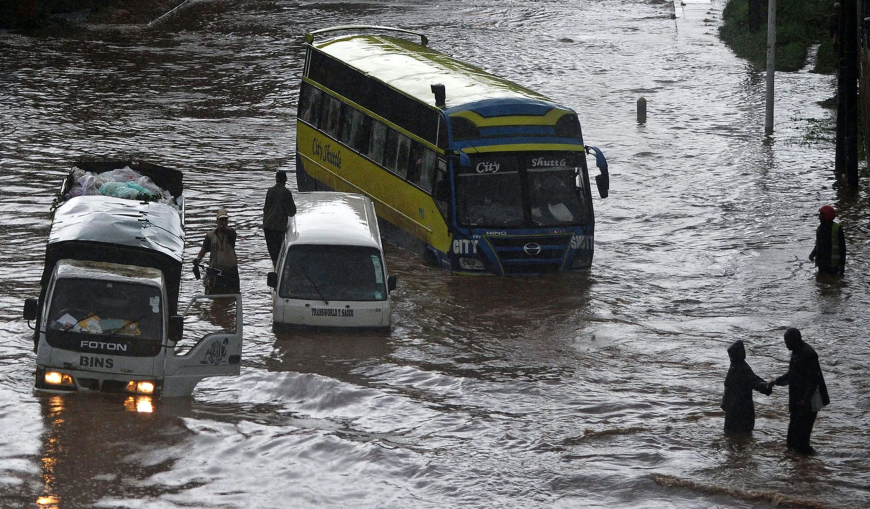
The weather agency has warned that flooding witnessed in March could recur, particularly in areas with poor drainage or those located near rivers. Water resource managers have been advised to closely monitor river levels and ensure drainage systems are cleared to prevent blockages.
Road authorities have also been placed on alert, with heavy rains expected to disrupt transport and damage infrastructure in some areas.
The advisory calls for heightened preparedness among residents and relevant agencies as the country braces for a potentially challenging peak of the long rains season.