





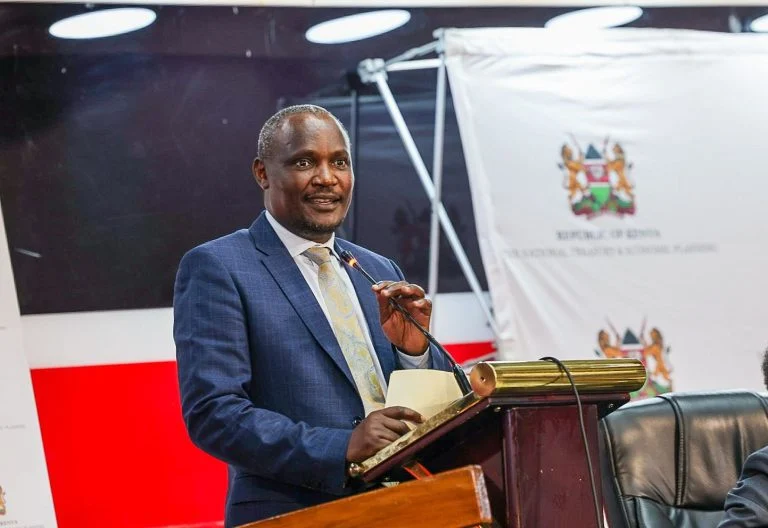
The government has defended plans to introduce toll charges on Thika Superhighway and other major roads, despite growing public opposition.
Treasury Cabinet Secretary John Mbadi said the State has no option but to explore alternative financing models, including Public-Private Partnerships (PPPs), to upgrade key highways and ease congestion without overstretching the national budget.
Speaking on Wednesday, Mbadi noted that persistent budget deficits have slowed infrastructure expansion, forcing the government to consider tolling as a sustainable funding mechanism.
He cited increasing traffic along Thika Road and the Athi River–Namanga Highway, saying congestion levels justify expansion and dualing works that may require toll charges.
“Nairobi to Thika needs to be dualed and tolled. Many people will be willing to pay for better services,” Mbadi said, urging Kenyans to trust the process despite concerns stemming from past projects.
On the proposed Rironi–Mau Summit superhighway, the CS indicated that tolling would likely apply mainly between Rironi and Mau Summit due to high traffic volumes. The extension toward Malaba may rely on a blended financing model to reduce toll rates.
Mbadi described the corridor as economically critical, linking Kenya to Uganda — the country’s largest trading partner — and emphasised the need to modernise the route.
He also confirmed ongoing negotiations with an American firm regarding the Nairobi–Mombasa Expressway, with the government leaning toward a PPP model.
Despite backlash from a section of motorists, Mbadi maintained that tolling remains one of the most viable options to deliver modern highways while managing fiscal pressure.

I’ve recently started a site, the information you offer on this web site has helped me greatly. Thank you for all of your time & work.
I am not certain where you are getting your information, however good topic. I must spend a while learning much more or figuring out more. Thanks for fantastic info I used to be searching for this information for my mission.
1kiqge