





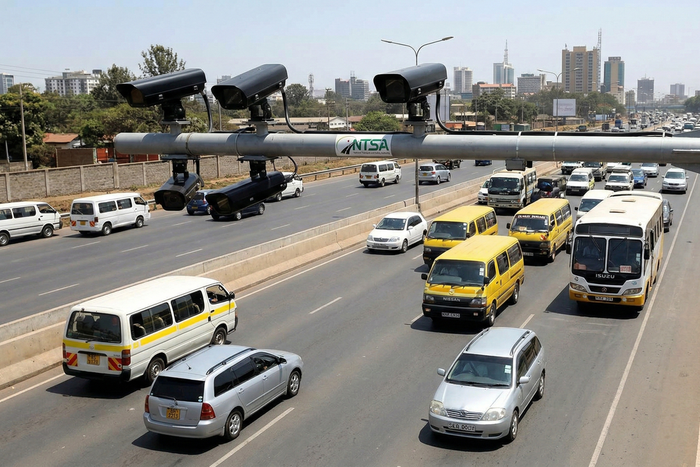
Motorists in Kenya are seeking urgent clarification from the National Transport and Safety Authority (NTSA) over the recently introduced automated traffic fines system, raising concerns about transparency, accountability and the protection of motorists’ rights.
The concerns were raised by the Motorists Association of Kenya (MAK), which has formally written to the transport regulator requesting detailed explanations on how the new enforcement framework will operate.
In a letter dated March 9, the motorists’ lobby questioned several aspects of the automated system, including how drivers will challenge fines issued through the platform and whether proper public consultation was conducted before the rollout.
The association said the public notice announcing the Instant Fines Management framework under the Traffic (Minor Offences) Rules of 2016 left several important issues unanswered.
MAK, which is a recognised participant in the National Council on the Administration of Justice (NCAJ), said motorists need clear guidelines on how the system will function before it is fully implemented.
Among the key concerns raised is the procedure motorists should follow if they wish to dispute traffic offences recorded by automated cameras.
According to the lobby group, the current notice does not clearly outline the process for motorists who may want to plead not guilty to offences detected through the new system.
The association warned that failure to clarify such procedures could create confusion and potentially lead to unnecessary congestion within the justice system.
MAK also requested detailed information regarding the technology used in the automated enforcement system, including speed cameras and other devices deployed on Kenyan roads.
The lobby asked NTSA to disclose how the devices are calibrated, certified and regularly verified to ensure accuracy in detecting traffic offences.
Another major concern raised relates to due process in automated law enforcement.
MAK cautioned that camera-based systems could be perceived as acting simultaneously as investigator, judge and executioner if sufficient safeguards are not put in place.
“Clarification is required on safeguards put in place to address concerns that automated camera systems may appear to act simultaneously as investigator, judge and executioner,” the letter stated.
The motorists’ group also sought clarity on financial accountability within the system.
Specifically, it asked NTSA to identify the designated accounting officer responsible for managing funds collected through traffic fines and the account where the money will be deposited.
Additionally, the association questioned whether adequate public participation was conducted before introducing the automated enforcement system.
The concerns come shortly after NTSA launched the Instant Fines Traffic Management System, which automatically sends traffic violation notifications to motorists through SMS alerts.
According to NTSA Director General Nashon Kondiwa, the platform is designed to operate with minimal human intervention, improving efficiency and transparency in traffic law enforcement.
However, motorists are now urging the authority to address the outstanding concerns to ensure the system operates fairly while protecting the rights of road users.

 over the recently introduced automated traffic fines system, raising concerns about transparency, accountability and the protection of motorists’ rights.)