





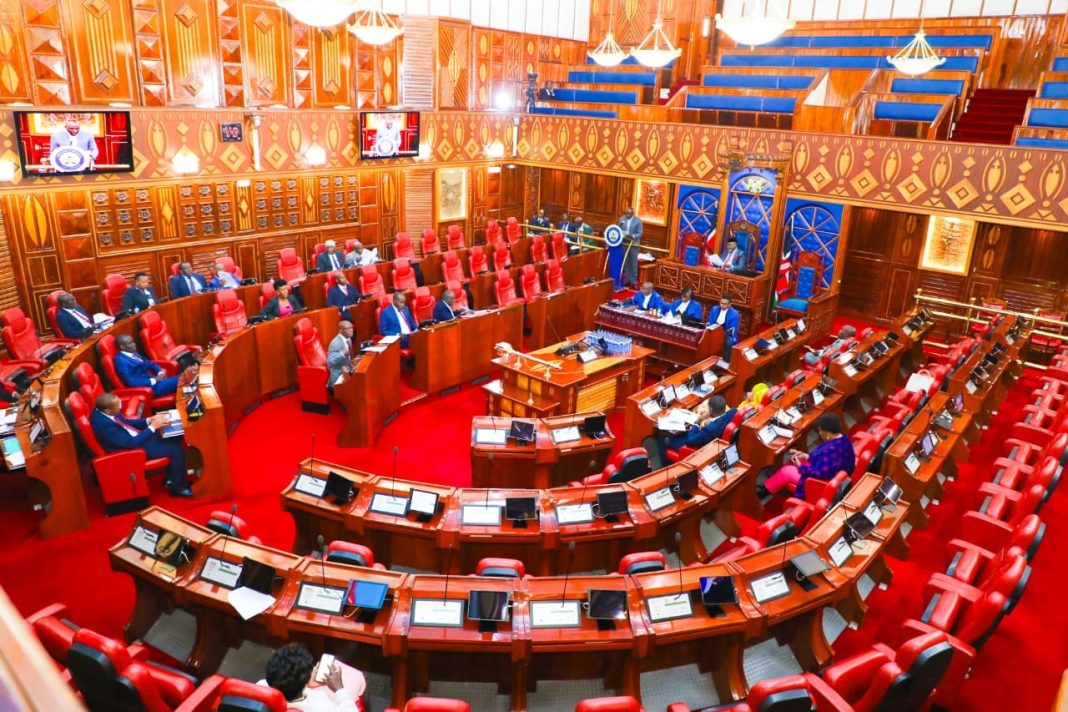
Kenya’s public and publicly guaranteed debt has climbed to Ksh12.3 trillion, prompting senators to warn that continued heavy borrowing locally could put pressure on the national budget and weaken fiscal stability.
A report tabled in the Senate by the Finance and Budget Committee shows that the country’s debt level has reached 67.5 per cent of Gross Domestic Product (GDP), exceeding the 55 per cent ceiling set under the Public Finance Management (PFM) framework.
The committee cautioned that unless the government strengthens fiscal discipline and improves debt management, the country risks breaching obligations under the law.
Committee chairperson Mandera Senator Ali Roba presented the findings during a Senate session reviewing the 2026 Medium-Term Debt Management Strategy submitted by the National Treasury.
According to the strategy, the government plans to rely heavily on domestic borrowing over the next three financial years. The report indicates that 78 per cent of net borrowing will come from the domestic market, while 22 per cent will be sourced externally between the 2026/27 and 2028/29 financial years.
Senators warned that while borrowing locally may appear easier, it comes with higher interest rates and shorter repayment periods, which could place additional strain on public finances.
“Domestic borrowing may be easier to access, but it carries higher interest costs and shorter repayment timelines, which could place enormous pressure on the national budget,” Roba said.
The committee further noted that about 45 per cent of domestic debt will mature within three years, while 21.6 per cent will fall due within one year, exposing the country to refinancing risks if liquidity tightens or interest rates rise.
Currently, domestic debt stands at Ksh6.84 trillion, representing 55.6 per cent of total debt, while external debt totals Ksh5.46 trillion. Most domestic borrowing is raised through Treasury bonds and Treasury bills issued in the local market.
The rising debt burden has also significantly increased government spending on repayments. By June 2025, the government had spent Ksh1.72 trillion on debt servicing, up from Ksh1.56 trillion in 2024.
Of the total repayment amount, Ksh1.14 trillion went to domestic debt, while Ksh579 billion serviced external loans. Debt repayments now consume over 71 per cent of government revenue, up from 69 per cent the previous year.
Stakeholders who appeared before the committee also raised concerns about the growing reliance on domestic borrowing.
The Institute of Certified Public Accountants of Kenya (ICPAK) warned that excessive borrowing from the local market could crowd out private sector access to credit, limiting funds available for businesses and potentially slowing economic growth.
At the same time, the Council of Governors (CoG) cautioned that rising debt servicing obligations are reducing the amount of revenue available for county governments to deliver essential services.
To improve transparency, the Senate committee recommended that the National Treasury submit a detailed report to Parliament within 60 days, outlining the structure, costs and risks associated with new borrowing instruments, including diaspora bonds, green bonds and sustainability-linked bonds.