





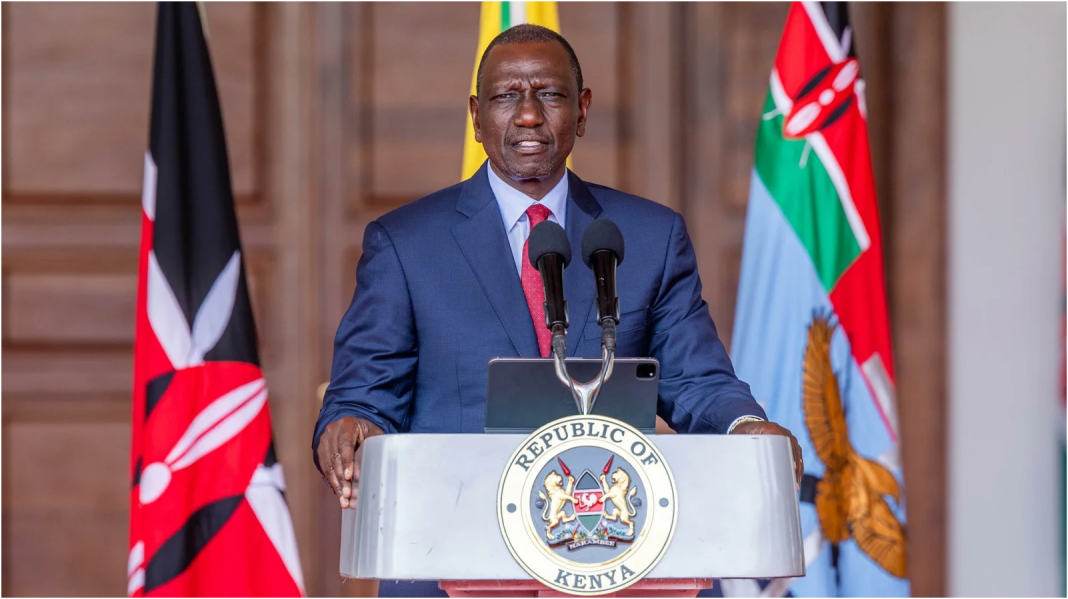
President William Ruto has condemned the recent wave of missile and drone strikes targeting several Gulf nations, warning that the escalating conflict poses a serious threat to global peace and the safety of hundreds of thousands of Kenyans living in the region.
In a statement issued on Monday, March 2, the Head of State expressed concern over attacks linked to rising hostilities between the United States, Israel, and Iran. He cautioned that the widening scope of the conflict risks destabilising the broader Middle East.
Ruto specifically cited strikes affecting the United Arab Emirates, Qatar, Saudi Arabia, Iraq, Oman, Kuwait, Jordan, and Bahrain. According to Diaspora Principal Secretary Roseline Njogu, more than 400,000 Kenyans live and work across Gulf Cooperation Council countries, making the situation particularly concerning for Nairobi.
Since February 28, Iran is reported to have launched hundreds of ballistic missiles and drones in retaliation for earlier U.S.-Israeli strikes on its territory. Authorities in affected countries reported multiple interceptions, though some projectiles struck strategic installations, including airports and military facilities.
“It is evident that the regionalisation of this conflict poses a grave threat to international peace and security,” Ruto said, calling for restraint and urgent diplomatic engagement. He emphasised the importance of multilateral institutions in resolving disputes, describing them as indispensable in managing the unfolding crisis.
Kenya’s Ministry of Foreign and Diaspora Affairs has already issued a travel and safety advisory for citizens living in or planning to travel to the Middle East. The government urged Kenyans in affected areas to register with the nearest embassy or consulate and update their next of kin details through official diaspora platforms.
PS Njogu assured that the government is closely monitoring developments and remains in contact with Kenyan missions abroad. She urged citizens to remain vigilant as the security situation remains fluid and unpredictable.
The developments have sparked anxiety among families in Kenya with relatives working in the Gulf, particularly in sectors such as domestic work, construction, aviation, and hospitality.
As global tensions mount, Nairobi’s focus remains on safeguarding Kenyan lives while pushing for diplomatic solutions to prevent further escalation in a region critical to Kenya’s diaspora and economic interests.