





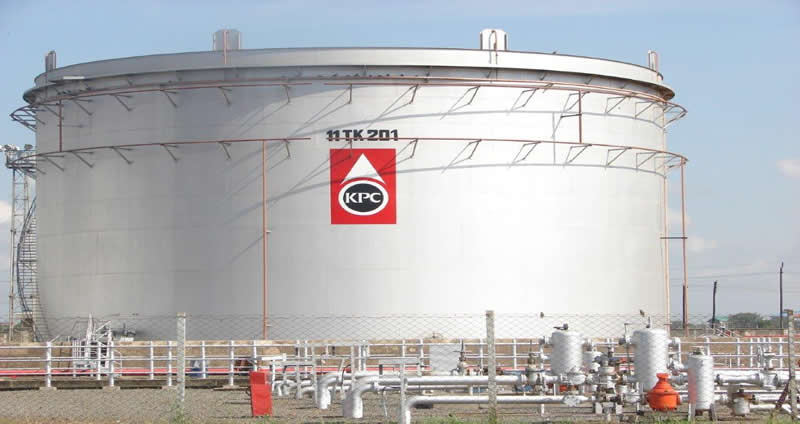
The government has raised Ksh106.7 billion from the Kenya Pipeline Company (KPC) Initial Public Offer (IPO), marking one of the largest public share sales in recent years.
Treasury Cabinet Secretary John Mbadi announced on Wednesday that Kenyans and local institutional investors purchased 7.95 billion shares, accounting for more than two-thirds of the total shares on offer. Regional neighbours, led by Uganda and Rwanda, also made significant investments, collectively acquiring 3.8 billion shares — equivalent to a 21.22 per cent stake.
Out of the 12.4 billion shares offered at Ksh9 each, the IPO recorded an oversubscription rate of 105.7 per cent. Mbadi revealed that applications totalled over 12.48 billion shares, forcing the government to scale down some allocations, including requests from East African Community (EAC) member states that had sought larger stakes.
“We offered 11,812,644,350 shares at 9 shillings each. The total number of shares applied for stood at 12,486,78,724, translating to an overall subscription rate of 105.7 per cent,” Mbadi stated during the announcement of the results.
Despite the strong uptake, the government will retain a 35 per cent controlling stake in KPC. Local institutional investors will hold 41 per cent, retail investors 2.56 per cent, KPC employees 0.06 per cent, and licensed oil marketing companies 0.041 per cent. Foreign investors will own a marginal 0.02 per cent stake.
Rwanda is reported to have purchased its allocation through its pension funds, mirroring Kenya’s own plans to diversify investments through structured use of workers’ savings under the National Social Security Fund (NSSF).
Mbadi dismissed claims that the IPO was overpriced or part of a hidden agenda to relinquish control of the strategic oil transporter. He termed such assertions as attempts to frustrate the process, maintaining that the share price reflected the company’s value and growth prospects.
The company is set to begin trading on the Nairobi Securities Exchange (NSE) on March 9, becoming the fifth listing on the current trading board.
Addressing concerns about the proposed National Investment Fund (NIF), where part of the proceeds had initially been expected to go, Mbadi clarified that the funds would first be deposited into the Consolidated Fund and later appropriated by Parliament before any transfers are made.
The successful IPO signals renewed investor confidence in Kenya’s capital markets and underscores regional interest in strategic state assets.


 Initial Public Offer (IPO), marking one of the largest public share sales in recent years.)
Merely a smiling visitor here to share the love (:, btw great style. “Make the most of your regrets… . To regret deeply is to live afresh.” by Henry David Thoreau.
Only wanna say that this is invaluable, Thanks for taking your time to write this.
Hey! I know this is somewhat off topic but I was wondering if you knew where I could find a captcha plugin for my comment form? I’m using the same blog platform as yours and I’m having trouble finding one? Thanks a lot!
feehwy
yaxmgh