





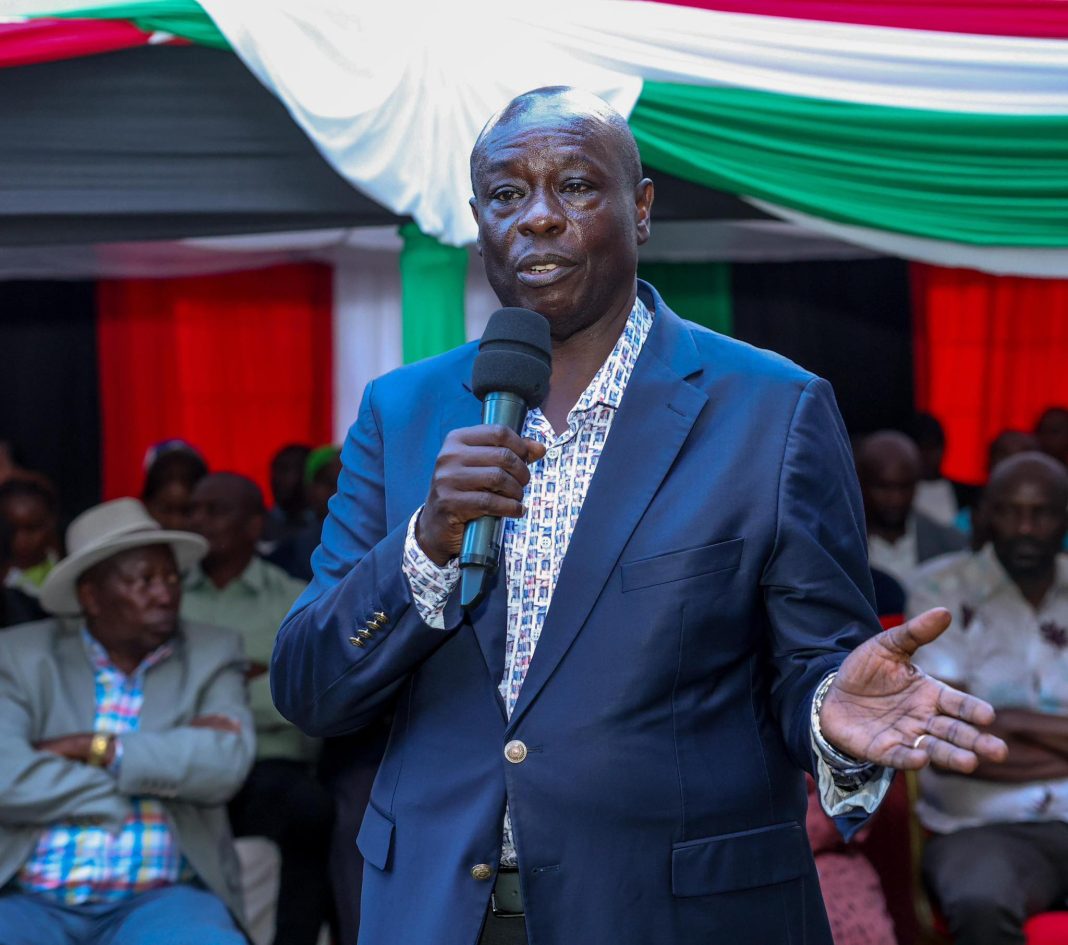
Former Deputy President Rigathi Gachagua has signalled openness to working with President William Ruto, but under specific conditions, in remarks that have stirred fresh political debate.
Speaking in Nyandarua County during the burial of former Ol Kalou MP David Njunguna Kiaraho, Gachagua said he was willing to engage the Head of State, provided certain issues within his political circle are addressed.
Gachagua indicated that his willingness to cooperate hinges on the President reconsidering some of the individuals around him, whom he accused of misleading him and contributing to political tensions.
“We can work together, but the people you walk with are the problem,” Gachagua said, addressing mourners during the ceremony.
At the same time, the former Deputy President called for decorum during the event, urging his supporters to refrain from political chants, particularly those targeting President Ruto. He warned against the use of “one term” slogans, emphasising the need to respect the solemn nature of the occasion.
“If the President comes to speak, I do not want to hear anyone chanting ‘one term’. We are here for a burial, and he has come in good faith,” he said.
Gachagua noted that despite political differences, the President was elected by Kenyans and should be accorded respect. He urged supporters to separate political competition from national unity and mutual respect among leaders.
The remarks come amid ongoing political realignments in the Mt Kenya region, where leaders continue to reposition themselves ahead of future electoral contests.
Gachagua’s statements have sparked speculation about a possible thaw in relations between him and President Ruto, following their highly publicised fallout that culminated in his impeachment last year.
Observers say the latest comments could signal a shift in tone, although the conditions outlined suggest that any potential reconciliation may depend on broader political considerations.
The burial ceremony of the late Kiaraho brought together leaders from across the political divide, offering a platform for reflection but also revealing underlying political dynamics in the region.
As the country gradually shifts focus towards upcoming political contests, Gachagua’s remarks are likely to fuel further debate on alliances and leadership within the Mt Kenya region.
Whether the comments translate into a formal political rapprochement remains to be seen, but they have already added a new dimension to the evolving political landscape.

browse unique items – A thoughtful layout improves the overall shopping experience nicely.
TrailTradeHub – Interface is simple, and browsing through products is easy.
open vendor listings – Design is simple yet effective, helping locate products easily.
browse top vendors – Items are easy to locate, interface is clean and minimalistic.
goods room link – Items are clearly displayed and navigation is simple.
harbor vendor shop – Everything is well structured and browsing feels natural.
shop handmade crafts – Interface flows naturally, making browsing effortless.
visit link now – The design is simple yet effective, making navigation easy and quick. fastNote
browse latest goods – Interface feels clean and intuitive for users.
check forest marketplace – Easy to navigate with content presented neatly.
visit this site – Everything feels well-organized and easy to browse.
ProDentim is a modern oral-health supplement formulated with specialized probiotics and naturally sourced ingredients to help maintain firm teeth