





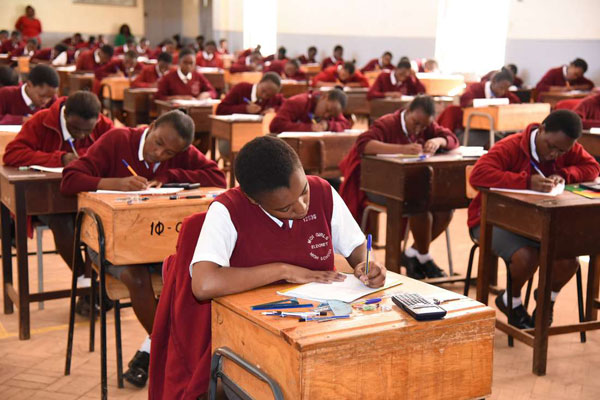
Concern is mounting in Lari Sub-county after a sharp decline in Kenya Certificate of Secondary Education (KCSE) performance, with parents and local leaders warning that the trend could jeopardise the future of hundreds of learners if urgent measures are not taken.
Education stakeholders say the worrying results come at a critical time when the country is transitioning from the 8-4-4 system to the Competency Based Education (CBE), raising fears over how students will perform under the new structure.
According to the 2025 KCSE results, only one candidate attained a grade A out of 3,918 students, while a majority—2,209 candidates—scored between D+ and D-. The report further shows that 412 students scored an E, with some schools recording their top candidates at grades as low as C-, D+, or below.
The overall performance reflected a notable drop in the mean score, which stood at 3.2629 in 2025 compared to 4.2610 recorded in 2024, deepening anxiety among parents and education stakeholders across the sub-county.
Parents, led by Kiambu County Parents Association chairman Samuel Wanjema, have raised concern over what they describe as declining standards in schools, questioning whether learners are adequately prepared for national examinations.
“We have done our part as parents by ensuring fees, uniforms and learning materials are provided. We now want to understand what is going wrong,” Wanjema said.
Another parent, Simon Wainaina, echoed the concerns, noting that many families are now uncertain about how candidates will perform in future examinations, especially with the ongoing education reforms.
Former Lari Kirenga Member of County Assembly Joseph Karichu described the trend as alarming, warning that continued poor performance could significantly reduce the number of students qualifying for university education.
Karichu called for renewed focus on improving academic outcomes, urging stakeholders to adopt better strategies to motivate both teachers and learners. He emphasised the need for collaboration between parents, teachers and students to reverse the downward trend.
“At this stage, education must remain a top priority for all stakeholders if we are to improve results and secure the future of our children,” he said.
Wanjema attributed the poor performance partly to low teacher morale and lack of adequate follow-up in schools, saying some educators feel demotivated due to reduced funding and limited incentives.
Despite the challenges, stakeholders noted that most schools in Lari are adequately equipped with classrooms, laboratories and other essential facilities, suggesting that the issue lies beyond infrastructure.
Leaders have now called for urgent interventions, including stronger monitoring of academic progress, enhanced motivation for teachers, and closer collaboration between all stakeholders to improve performance.
As concern grows, residents are hoping that swift action will help restore Lari’s academic standing and improve outcomes for future KCSE candidates.



Hashtags: #nhacailuck8, #linkvaoluck8, #luck8, #luck882cocom