




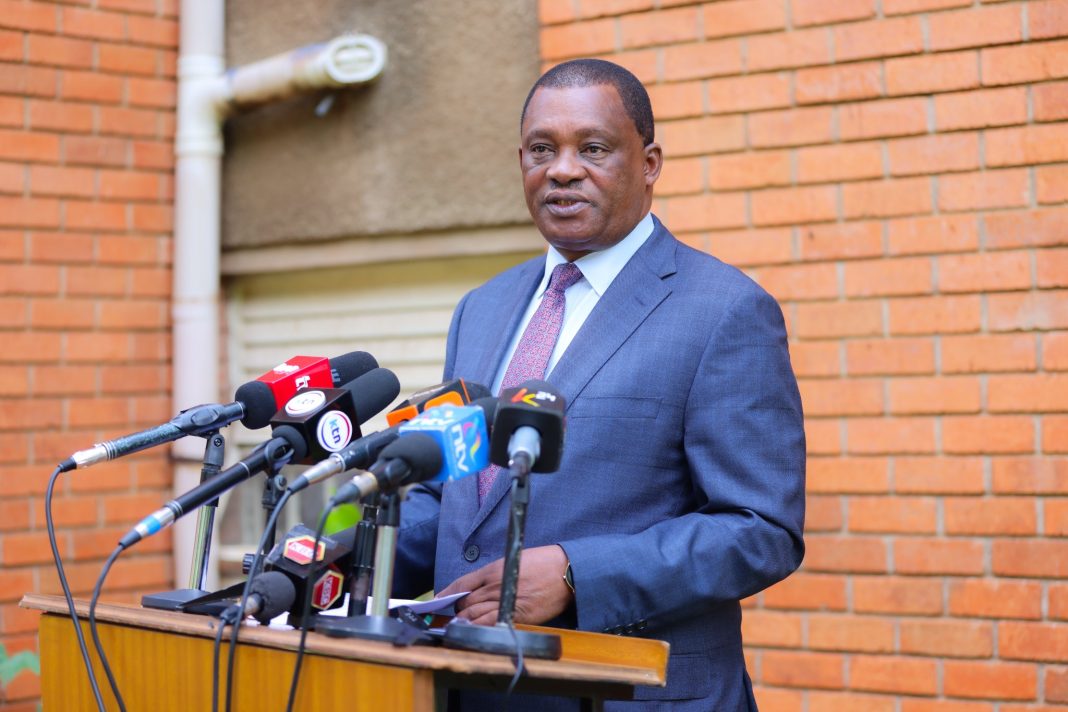
Former Attorney General Justin Muturi has sharply disagreed with Health Cabinet Secretary Aden Duale over the planned establishment of an Ebola quarantine facility in Laikipia, insisting that Kenyans must be fully consulted on matters affecting their health, safety, and well-being.
Muturi maintained that public participation is not optional but a constitutional requirement, especially when government decisions touch on sensitive public health matters. He said attempts to dismiss public concerns risk undermining trust in national health policy and governance.
His remarks come after CS Duale told the National Assembly that the government would not subject the proposed facility to public consultation, arguing that emergency health responses require swift action to prevent possible disease transmission.
Duale defended the project as a necessary intervention to strengthen Kenya’s preparedness and response capacity, saying delays or prolonged consultations could compromise national safety. He also argued that the government has a duty to act decisively in the interest of protecting citizens.
However, Muturi countered that Kenya’s legal and constitutional framework is clear on transparency and civic engagement. He cited the International Health Regulations (2005), noting that they require countries to strengthen surveillance and preparedness systems while respecting human dignity and fundamental freedoms.
He further argued that the regulations, which came into force in 2007, are binding on World Health Organisation member states, including Kenya, and should not be misrepresented to justify excluding the public from critical national decisions.
Muturi added that the principle of public communication is embedded within global health governance systems, stressing that citizens have a right to information on projects that may affect their safety. He said openness and accountability are key to building public confidence in health interventions.
“Kenyans have a legitimate right to seek information on any matter that may affect their health, safety, and well-being,” Muturi stated, adding that the Constitution guarantees access to information and public participation as a national value.
He further warned against dismissing public concerns, saying such an approach weakens trust between citizens and government institutions. According to him, meaningful engagement is essential for effective implementation of health policies.
The debate has sparked widespread public interest, particularly among Laikipia residents, who have raised concerns over the proposed facility and its potential risks. Several leaders across the country have also questioned the lack of public participation, calling for more openness before the project proceeds.
On his part, CS Duale defended the facility, saying isolation centres are necessary for managing outbreaks and protecting both Kenyan and international populations. He argued that similar arrangements have been used before during global health emergencies such as COVID-19.
Duale insisted that the government will continue to prioritise public safety while ensuring Kenya remains prepared for any potential health threats.