





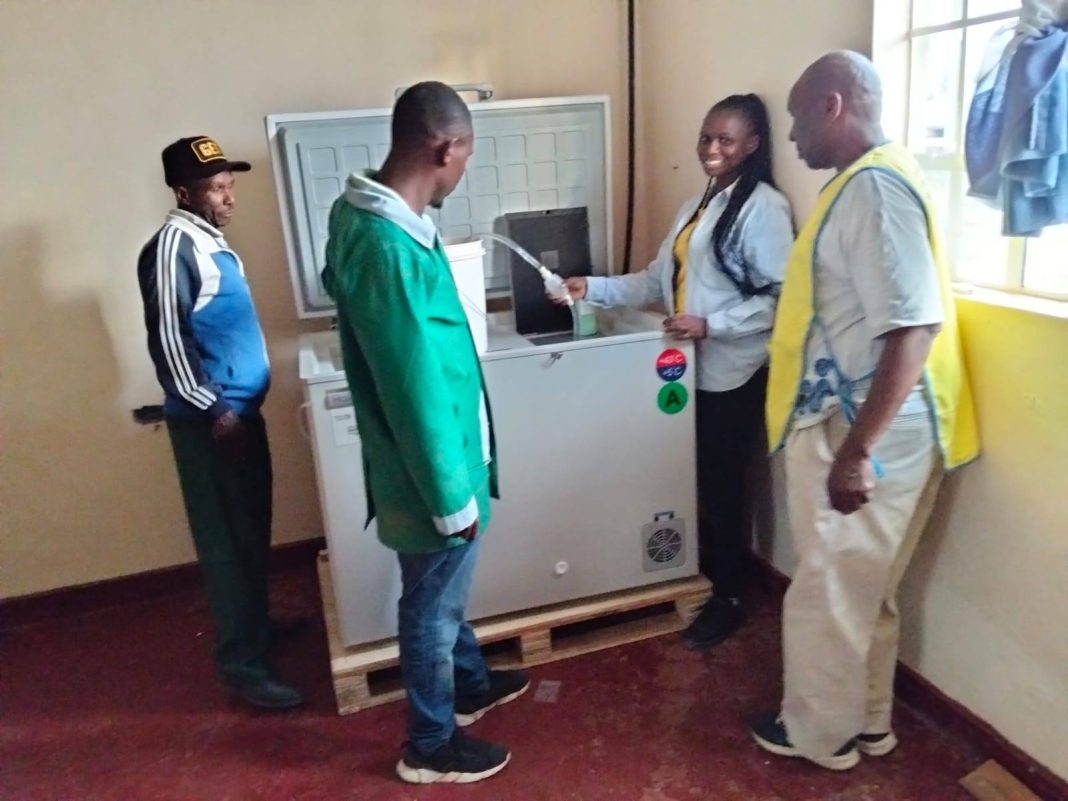
The Nakuru County Government has begun using solar-powered refrigerators to store vaccines, ensuring life-saving immunisations remain safe even in areas without reliable electricity.
According to County Biomedical Engineering Officer Mr. Kibet Keitany, the initiative significantly boosts storage capacity at health facilities in hard-to-reach locations. Solar fridges have already been installed at Munanda dispensary in Gilgil Sub-County, Gacharage in Kuresoi North, and Roret and Lomolo dispensaries in Rongai Sub-County, with support from the Ministry of Health and UNICEF.
“Solar-powered vaccine storage ensures vaccines maintain their potency without relying on electricity or fuel generators,” Mr. Keitany said. “This is a milestone in expanding access to essential immunisation services for all residents.”
Facilities including Chepakundi, Tendwet, Kiplemeiywo, Masaita, Kapsinendet, Ndoroto, Kinungi, Ngondi, Korabariet, St Joseph’s Hospital, and Mwangi Michuki Dispensaries now benefit from solar cold chain systems. Installations are ongoing at Rongai Turi, Kamosop, Kigonor, Lusiru, Arus, and Kapyemit dispensaries.
Mr. Keitany highlighted the broader benefits of the initiative: reduced electricity costs, minimal maintenance, and continuous cold storage powered directly by sunlight. The project aligns with Governor Susan Kihika’s commitment to strengthen primary healthcare and expand equitable access across all 11 sub-counties.
“A robust cold chain system is critical to public health. Vaccines lose their effectiveness without reliable storage,” he said, adding that the initiative brings essential healthcare closer to residents, reducing the need for long-distance travel for immunisations.
Solar-powered refrigerators operate using electricity generated from the sun, running compressors directly on solar energy. This ensures uninterrupted vaccine preservation and quality, even in remote, off-grid areas of Nakuru County.