





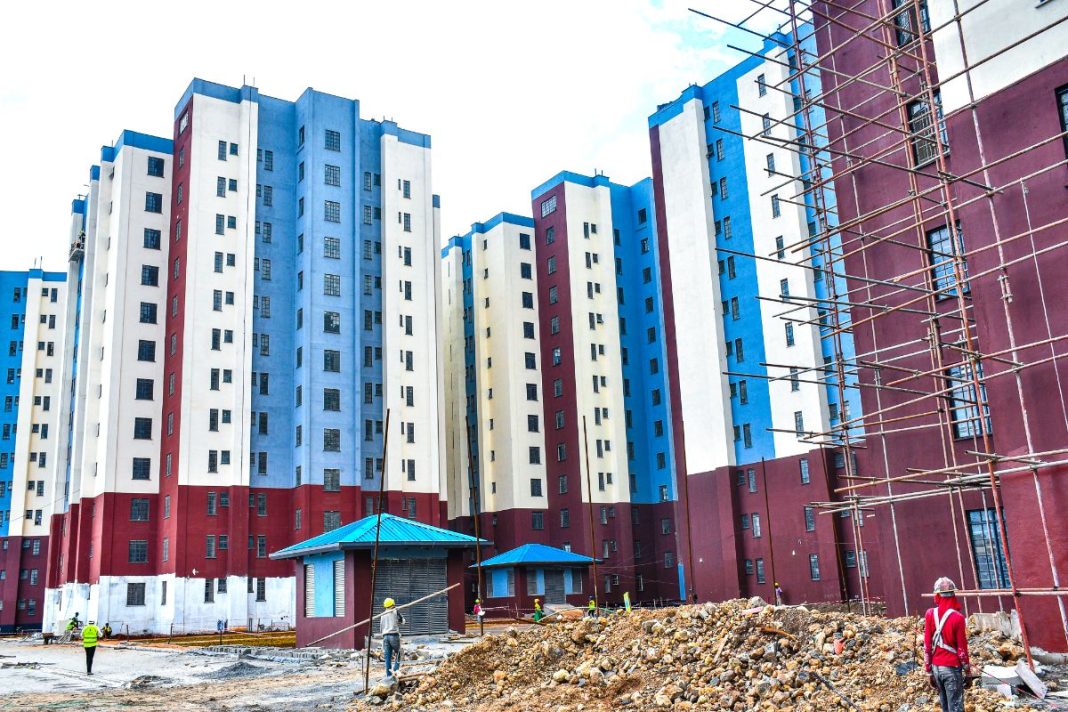
The government expects collections from the Affordable Housing Levy to reach about Ksh97 billion this financial year, reflecting stronger compliance and improved enforcement of the statutory deduction from employees’ salaries.
Treasury Cabinet Secretary John Mbadi revealed the revised projection in the 2025–2026 supplementary budget documents, noting that the new target is slightly higher than the earlier estimate of Ksh95 billion. The government believes the increase will be supported by consistent deductions and improved collection mechanisms implemented by the Kenya Revenue Authority (KRA).
If the target is achieved, it will represent a significant increase compared to the previous financial year. During the 2024–2025 period, KRA collected about Ksh73.2 billion from the levy, surpassing the Treasury’s earlier projection of Ksh63.2 billion.
The projected Ksh97 billion collection would therefore mark a rise of about 32.51 per cent compared to the previous fiscal year, signalling growing compliance among employers and employees across the country.
The Affordable Housing Levy was introduced as part of the government’s broader plan to fund the Affordable Housing Programme, which aims to increase access to decent and affordable homes for Kenyans.
In its first year of implementation, the levy generated Ksh54.16 billion, narrowly missing the target of Ksh54.58 billion by about Ksh415 million.
However, the rollout of the levy was not without challenges. Collections were temporarily halted for three months between January and March 2024 after courts ruled that the levy was unconstitutional, arguing that it unfairly targeted workers in the formal sector while excluding those in the informal economy.
To address the legal concerns, Parliament later passed the Affordable Housing Act 2024, which President William Ruto signed into law on March 19, 2024. The new legislation expanded the scope of the levy to include workers in both the formal and informal sectors, allowing the Kenya Revenue Authority to resume collections.
The government has maintained firm enforcement of the levy despite criticism from some quarters regarding fairness and the speed of delivering housing units under the programme.
Speaking previously during a State of the Nation Address, President Ruto defended the initiative, stating that the Affordable Housing Programme is a key pillar in improving access to decent housing while also creating jobs in the construction sector.
Meanwhile, the government has introduced additional measures to make the programme more accessible to low-income earners.
In December, Housing Principal Secretary Charles Hinga announced that Kenyans earning Ksh20,000 or less would not be required to pay the usual housing deposit when applying for houses under the programme.
Under the arrangement, the government will cover the required deposit through a structured assistance scheme managed by the Affordable Housing Board, allowing beneficiaries to repay the amount gradually.
Officials say the move is expected to particularly benefit informal sector workers such as artisans, traders and casual labourers who often earn regular incomes but struggle to access traditional mortgage financing.

1brbge
bn03hq
akqub5