





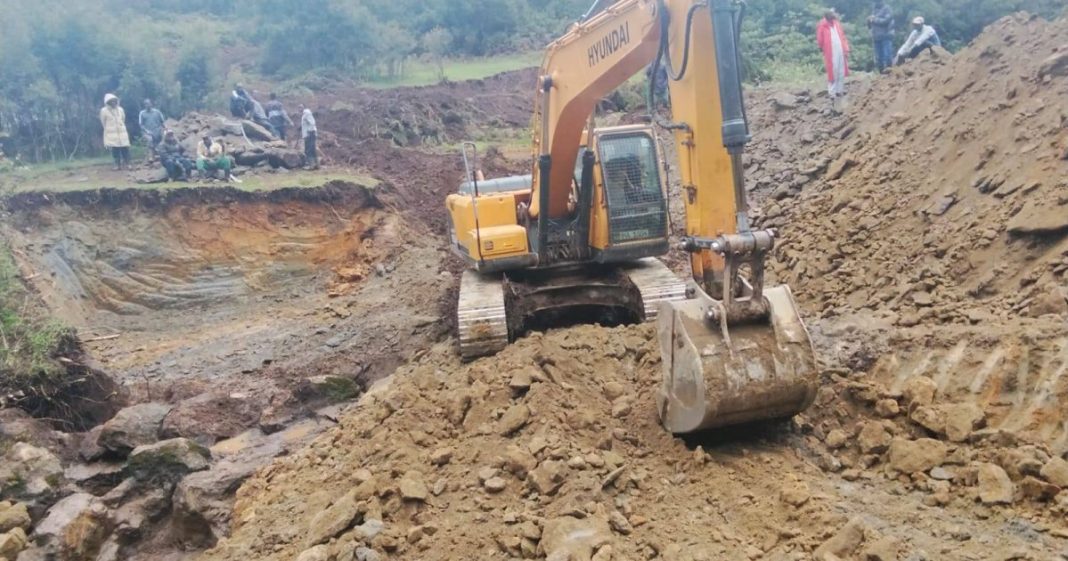
Construction of the Escarpment Belt Irrigation Project in Lari Constituency is steadily progressing, raising hopes among residents for improved agricultural productivity and reliable water access.
The Sh316 million project, being implemented by the State Department for Irrigation in partnership with local leadership, is designed to tackle persistent water shortages in the escarpment belt while boosting food production. The initiative will draw water from the Gatamaiyu River, with key works already underway at the intake point located within Kinale Forest.
Engineers have successfully completed river diversion works, marking a significant milestone in the early phase of the project. Attention has now shifted to excavation and rock chiselling as preparations continue for the construction of a weir and related infrastructure.
Survey teams are currently on site conducting beaconing exercises to determine the final height of the weir. This step is crucial in guiding the next phase of construction, after which contractors are expected to begin building the main structure. Delivery of construction materials is also expected to commence soon.
Once complete, the irrigation system will utilise a gravity-fed piped sprinkler network to supply water across approximately 500 acres of farmland. The project is expected to directly benefit more than 1,500 residents, while over 10,000 families in areas such as Kijabe, Machani, Mbau-ini, Korio, Kabunge, Escarpment and Gitithia are set to gain indirectly.
In addition, a 1,450-metre pipeline will be installed to distribute water efficiently to farms across the region, supporting both crop farming and household needs.
Speaking during previous inspections, Irrigation Principal Secretary Ephantus Kimotho said the project is part of broader efforts to enhance food security and climate resilience, particularly in regions prone to drought.
Area MP Mburu Kahangara noted that the escarpment belt has long struggled with water scarcity, especially during dry seasons. He expressed optimism that the project will help farmers transition from dependence on relief food to sustainable agricultural production.
Residents have welcomed the development, saying it will transform livelihoods and open up new economic opportunities. Some also highlighted plans to establish water user associations to manage the resource effectively.
Beyond agriculture, the project is creating employment opportunities for local residents, with both skilled and unskilled labour engaged at the construction site.
The intake phase is expected to be completed within a month, with the entire project projected for completion within one year.



Hotline: 0933 518 746
fmazet
qign0i