





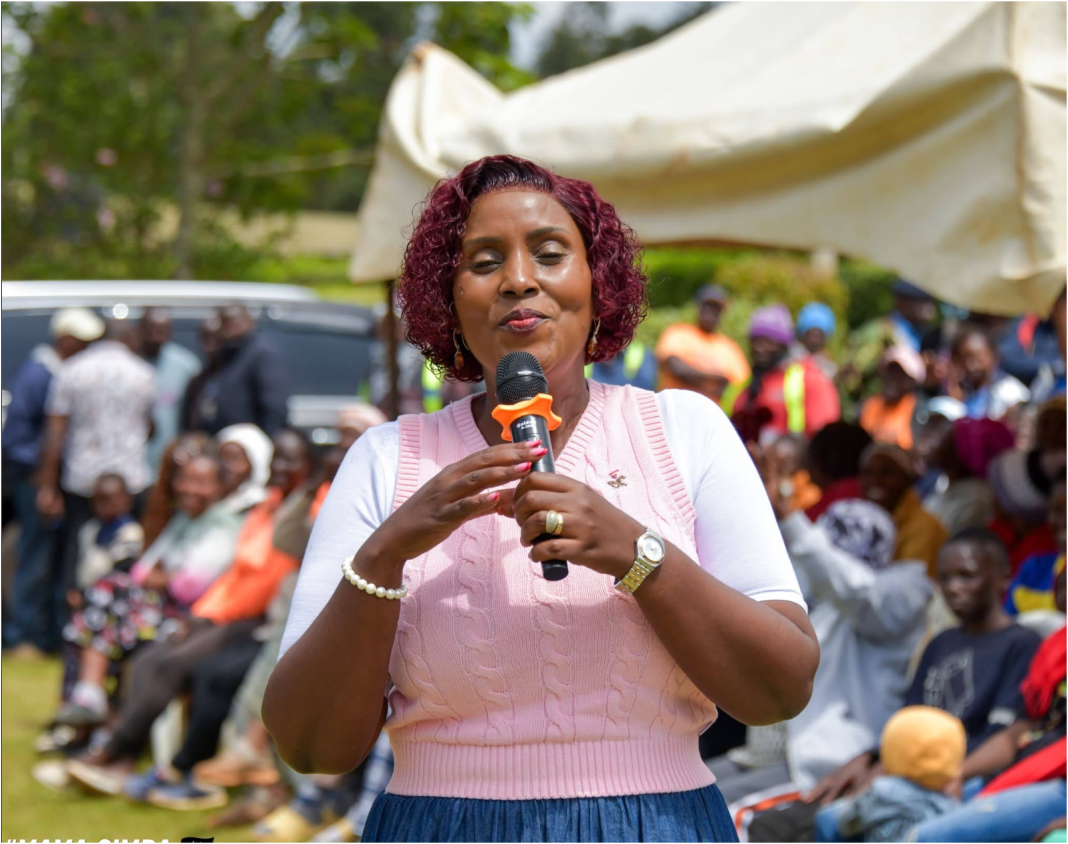
Thika Town MP Alice Ng’ang’a has called on parents across the country to take a more active role in guiding and mentoring their children as concerns grow over rising cases of unrest in schools.
The legislator said parents have a critical responsibility in shaping the behaviour and values of learners, warning that failure to address indiscipline early can result in devastating consequences for both students and their families.
Her remarks come at a time when several schools have reported incidents of unrest, prompting discussions among education stakeholders, parents and government officials on the best ways to restore discipline and improve the learning environment.
Ng’ang’a urged parents to create time for open and honest conversations with their children, saying many young people face challenges that often go unnoticed due to a lack of communication at home.
According to the MP, family guidance remains one of the most effective ways of helping learners make responsible decisions and avoid actions that may place their future at risk. She noted that parents should not leave the responsibility of moulding children entirely to teachers and schools.
The legislator warned that cases of indiscipline can quickly escalate and lead to serious outcomes, including destruction of property, injuries, legal consequences and, in extreme situations, loss of life.
She said some families have been forced to endure immense pain after children became involved in incidents that could have been prevented through proper guidance and mentorship.
Ng’ang’a further observed that the effects of indiscipline often extend beyond the individual learner, affecting parents, schools and entire communities. She stressed that when students engage in destructive behaviour, the consequences can remain with them for years and may affect their education, careers and personal development.
The MP also encouraged parents to closely monitor the welfare of their children, understand the challenges they face and provide support whenever necessary. She noted that the changing social environment has exposed learners to different pressures, making parental involvement more important than ever.
Her comments add to growing calls from leaders and education stakeholders for stronger collaboration between parents, teachers and school administrators in addressing behavioural challenges among learners.
As discussions on school safety and discipline continue, Ng’ang’a maintained that meaningful engagement between parents and children remains key to preventing unrest and helping young people stay focused on their education and future aspirations.
She expressed optimism that with proper guidance, mentorship and cooperation from all stakeholders, schools can continue providing a safe and supportive environment where learners can thrive academically and socially.