





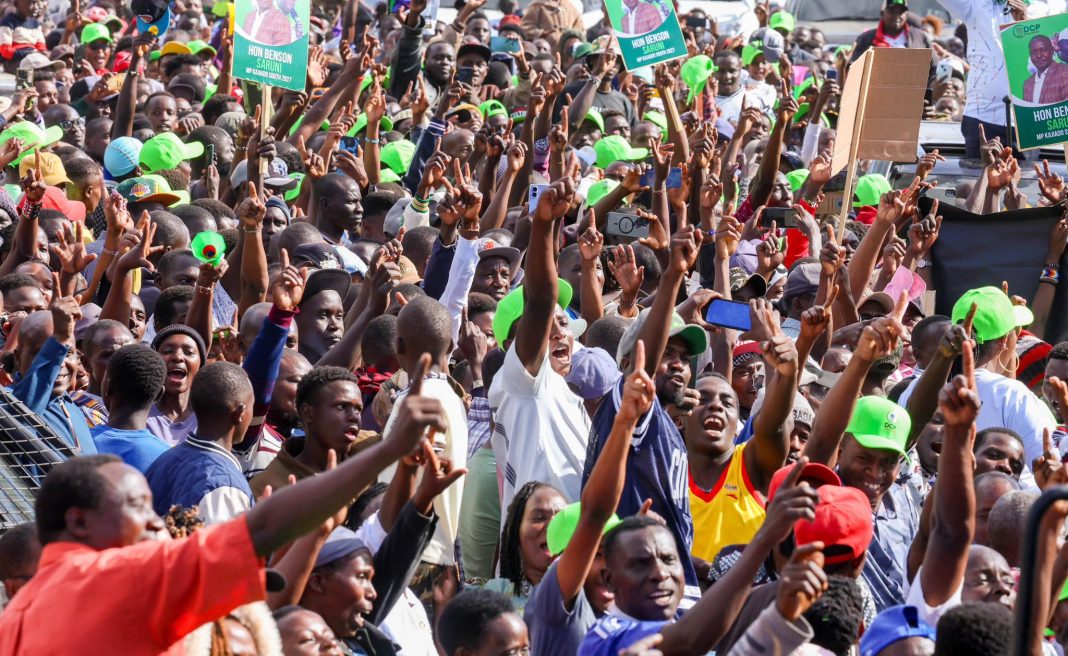
A new opinion poll by Trends and Insights For Africa has revealed declining public support for cooperation between the United Democratic Alliance (UDA) and the Orange Democratic Movement (ODM), even as former Deputy President Rigathi Gachagua’s Democracy for the Citizens Party (DCP) continues gaining political momentum.
According to the latest TIFA findings released on Thursday, support for the broad-based government arrangement involving President William Ruto and ODM leader Oburu Odinga has dropped significantly over the past months.
The survey shows support for the arrangement declined from 44 percent in November 2025 to 30 percent in May 2026, reflecting a major shift in public opinion.
At the same time, opposition to the cooperation increased to 56 percent in May 2026, up from 48 percent recorded in November 2025.
The poll further indicates that support for the broad-based government had previously stood at 22 percent in May 2025 before rising steadily to 44 percent later in the year.
However, the latest findings suggest growing dissatisfaction among sections of Kenyans regarding the political cooperation between UDA and ODM.
TIFA also reported changing political loyalties across the country, with both ODM and UDA recording reduced support compared to their popularity levels during the August 2022 General Election period.
In contrast, Gachagua’s DCP party appears to be gaining traction nationally.
According to the survey, support for DCP rose from 6 percent in November 2025 to 16 percent in May 2026, positioning the party among emerging political forces in the country’s evolving political landscape.
The report attributed the changes to possible voter fatigue, shifting alliances, and growing uncertainty within the country’s political environment.
“The findings suggest a significant decline in support for both ODM and UDA compared to their August 2022 levels,” part of the report stated.
The survey also tracked support for other political parties, including Jubilee, Wiper, DAP-Kenya, and Ford-Kenya, alongside a considerable number of undecided voters.
TIFA conducted the poll between May 2 and May 11, 2026, using face-to-face household interviews across nine regions of the country.
The survey covered areas including Mt Kenya, Nairobi, Coast, Nyanza, Western, Rift Valley, Northern Kenya, and Lower Eastern regions.
A total of 2,013 respondents participated in the study, with TIFA indicating a margin of error of plus or minus 2.18 percent.
The latest findings are expected to intensify political debate ahead of the next election cycle, especially as new alliances and parties continue reshaping Kenya’s political landscape.


 and the Orange Democratic Movement (ODM), even as former Deputy President Rigathi Gachagua’s Democracy for the Citizens Party (DCP) continues gaining political momentum.)